Skip to content

AI for manufacturing — on-premise

Artificial intelligencethat stays in your plant.

AI systems for technical documentation, quoting and service reports — installed on your hardware, inside your network. Fixed cost instead of tokens. Works offline, right down to the line.

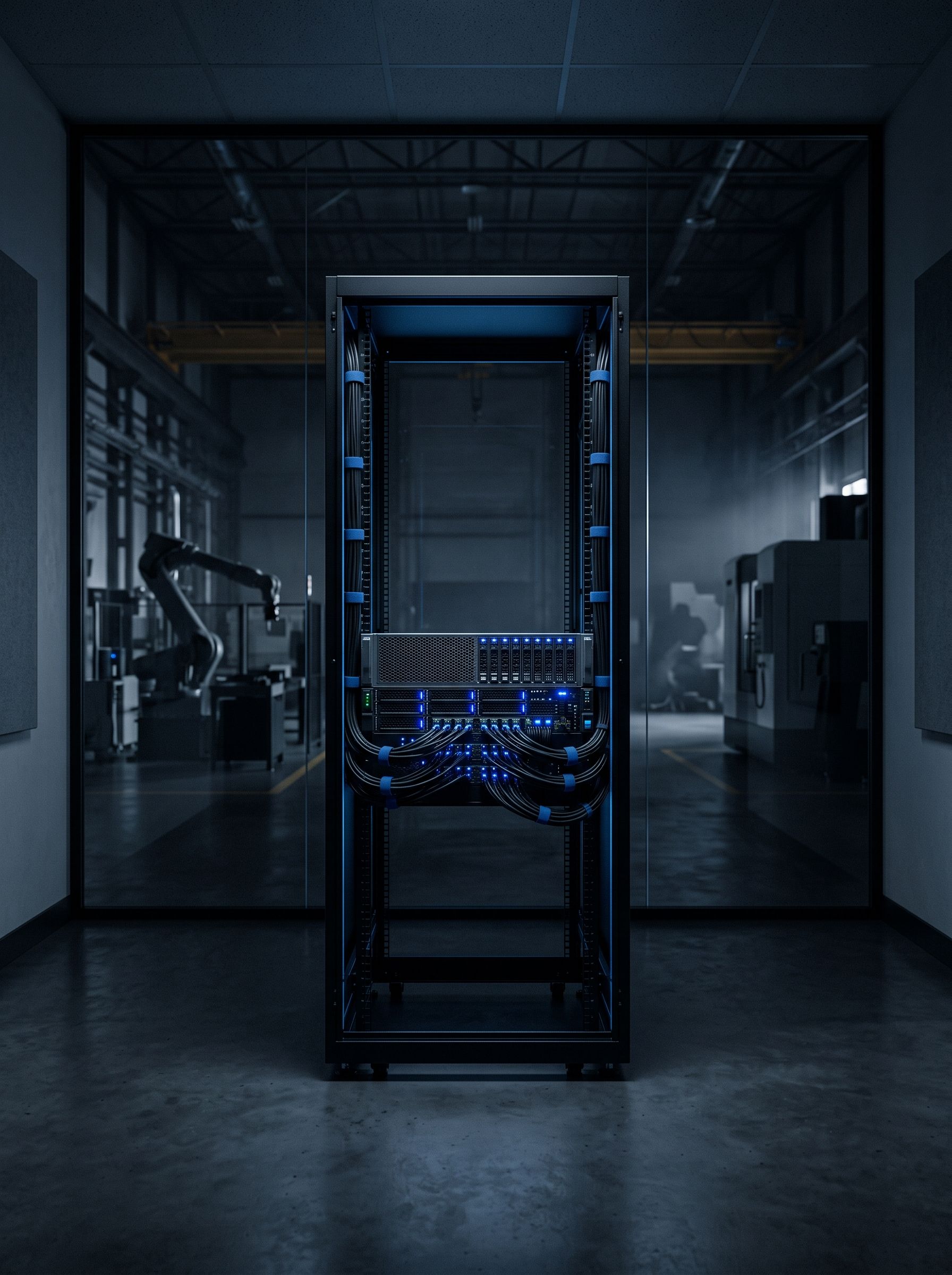
Open server rack with a GPU server and glowing blue status lights. Behind it, through a glass wall, the production hall with a robot arm and CNC machines.
GPU server in a manufacturing plant server room
Data packets to the internet
0Data packets to the internet
Monthly cost, no tokens
FixedMonthly cost, no tokens
Employees, our focus
50–500Employees, our focus
Location and service area
BavariaLocation and service area

The problem

Cloud AI is the wrong architecture for your plant

The models work. The delivery path is the problem: sending engineering and costing data to the cloud buys risks no contract solves — only the architecture does.

  1. 01

    Plant data becomes someone else’s data

    Bills of material, drawing numbers and quote calculations are trade secrets. In the cloud they sit with a processor, often in a third country. The GDPR assessment is expensive — the competitive risk remains anyway.

  2. 02

    Token billing makes budgets unplannable

    Usage-based pricing rises exactly when the system gets adopted. The tool turns into a variable cost line nobody can plan credibly over three years.

  3. 03

    No connection, no tool

    On a segmented production network, on the shop floor and at a customer site, bandwidth is not a given. An AI that has to be online fails precisely where it is needed.

  4. 04

    Projects stall at proof of concept

    Consultancies deliver slide decks, IT providers interfaces. What is missing is someone who knows the process on the shop floor and scopes the use case so the department actually uses it.

The solution

One model. Your hardware. Your network.

Open-weight language models on a server inside your building, an index over your documents, an interface that needs no training marathon. The data stays where it is created.

  1. 01

    On-premise, not cloud

    The model runs on a GPU server in your own server room. Prompts, documents and answers stay inside the company network. No processor, no third country, no training on your data.

  2. 02

    Fixed cost

    A one-off implementation, then a fixed monthly fee for operation and updates. No tokens, no usage spikes. Total cost is known before the project starts.

  3. 03

    Works offline

    The system runs without an internet connection — on the production network, at the line, on service calls with no reception. Updates arrive under your control, not as a silent version change.

  4. 04

    From the shop floor

    Founded out of robotics and manufacturing automation. We talk about cycle times, revision levels and bills of material, not transformers. The use case is decided by the process.

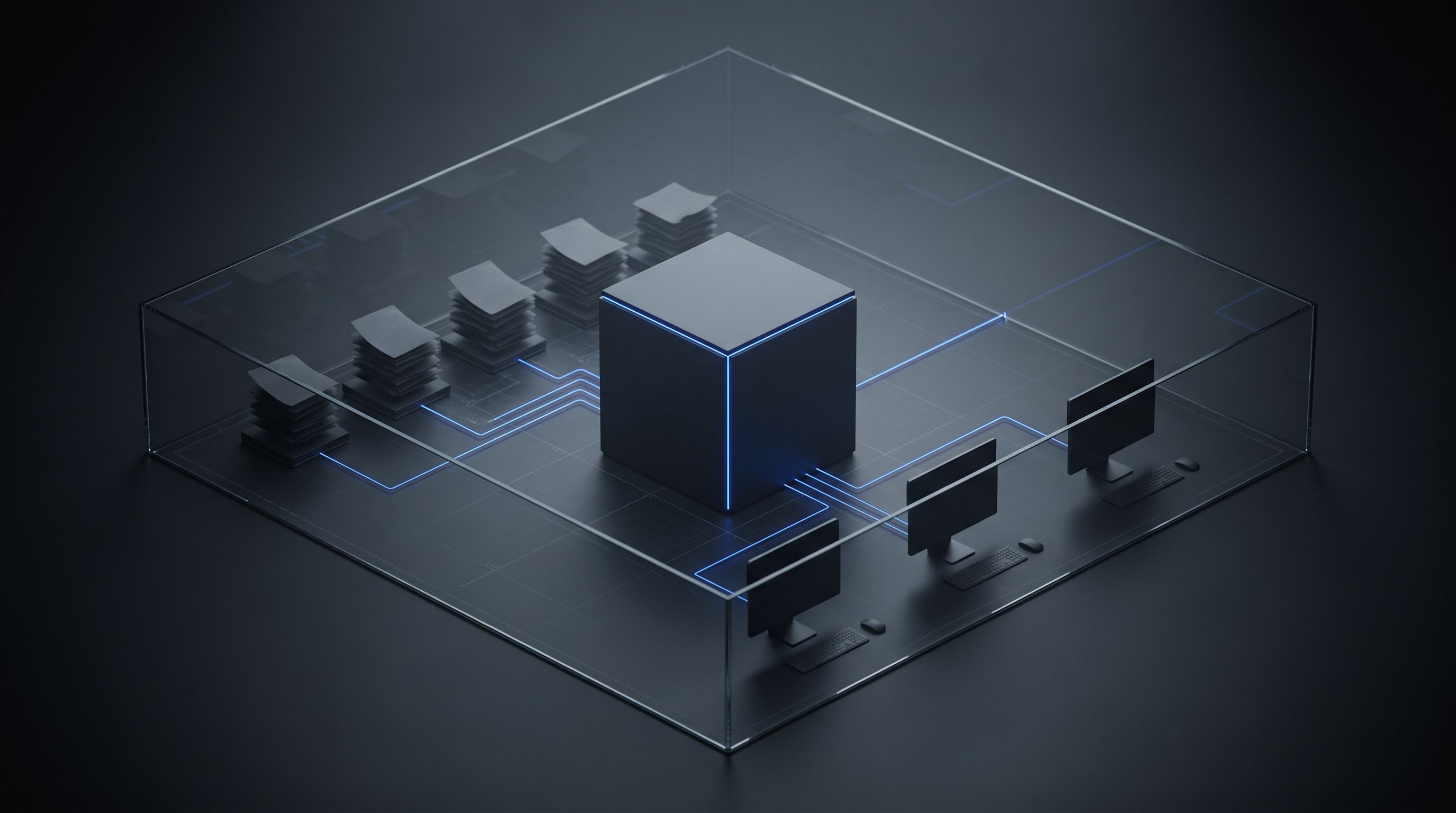
Isometric illustration: a central server connected to stacks of documents and workstations, all inside a glass boundary that no connection crosses.
Architecture: company network, GPU server, document index

Typical setup

Model
Open-weight LLM, hosted locally (Llama or Qwen class)
Knowledge base
Vector index over your documents: PDF, Office, CAD metadata
Hardware
One in-house GPU server, sized during the analysis
Integration
Read-only interfaces to ERP and PLM, no write access in the pilot
Access
Browser on the company network, permissions via your existing AD
Data flow
Inside your network only, no outbound traffic

Use cases

Three processes that run better locally

No chatbot for everyone. We start with one process that measurably costs time and whose data is not allowed to leave the building.

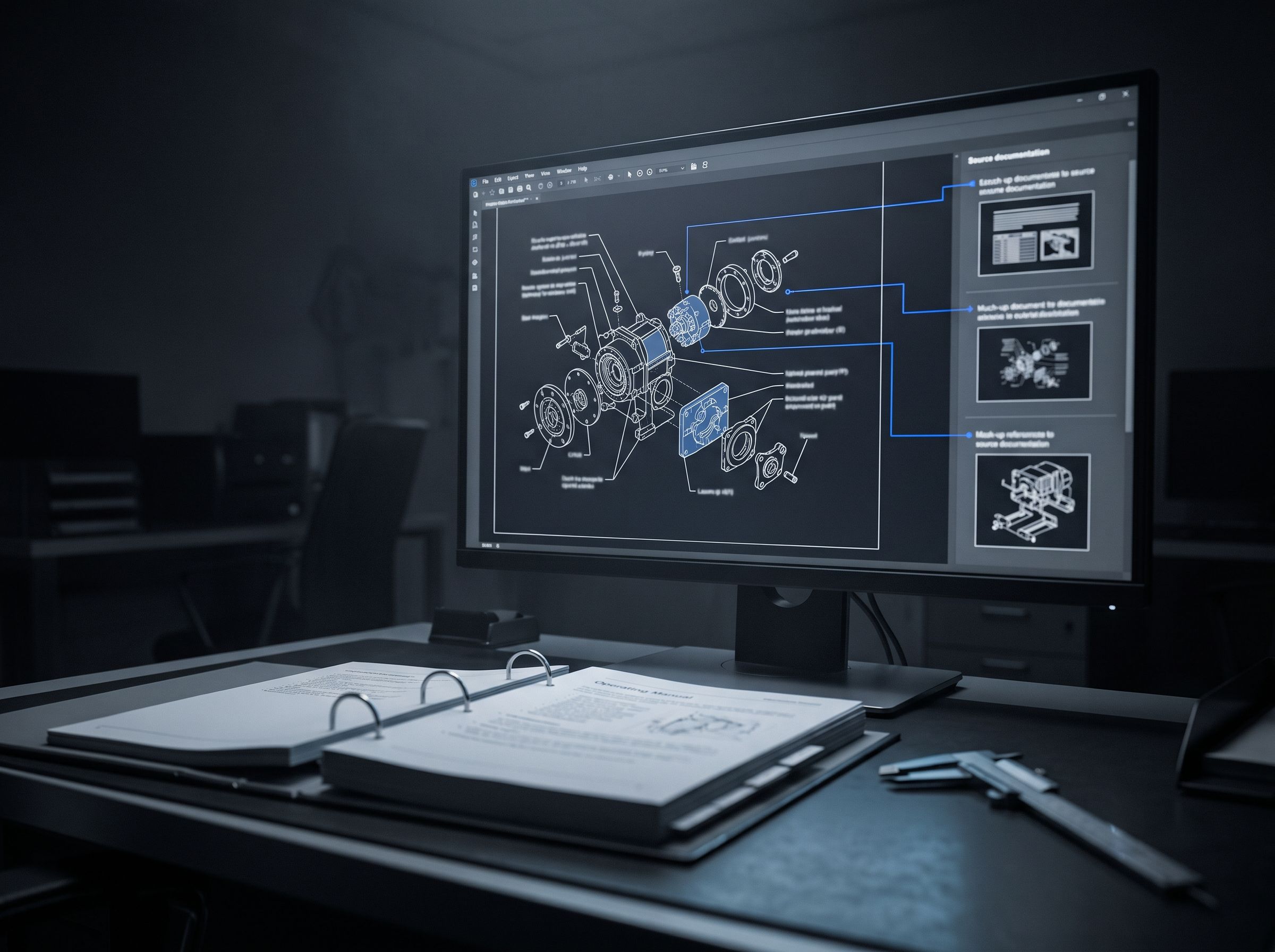
Monitor showing an exploded-view drawing of an assembly, with highlighted parts linked to source documents in a side panel; in front, a binder with an operating manual and a caliper.
Document view with source citations

01

Technical documentation

Operating manuals, maintenance plans and change documentation drawn from bills of material, legacy documents and standards — as a draft the writer reviews and approves.

Today

Hunt down the predecessor document, copy passages, check references to standards by hand, track revision levels manually.

With Fusiores

The system drafts from the bill of material and the previous revision, flags deviations and cites the source behind every statement.

First draft in minutes instead of working days
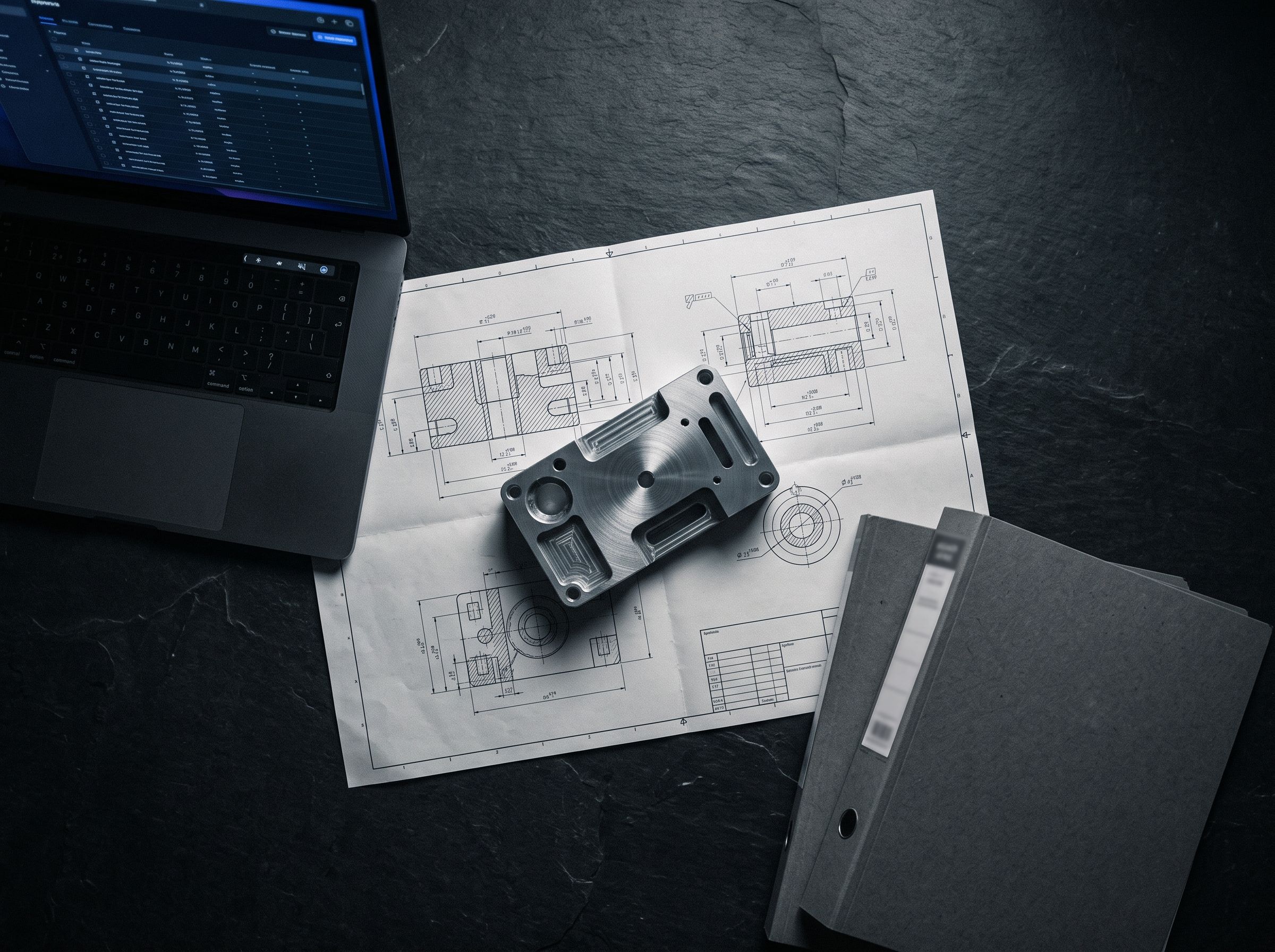
Top-down view of a desk: a technical drawing with a milled aluminium part on it, next to a laptop showing a list of line items and archive folders.
Quote draft with reference orders

02

Quoting

Enquiries, drawings and specifications become costed quote drafts — based on your own order history.

Today

Read the enquiry, search the archive for comparable projects, check back with engineering, assemble the quote from an old file.

With Fusiores

The system finds comparable orders, pulls line items, effort estimates and price levels, and presents the draft for review.

Response time drops from days to hours

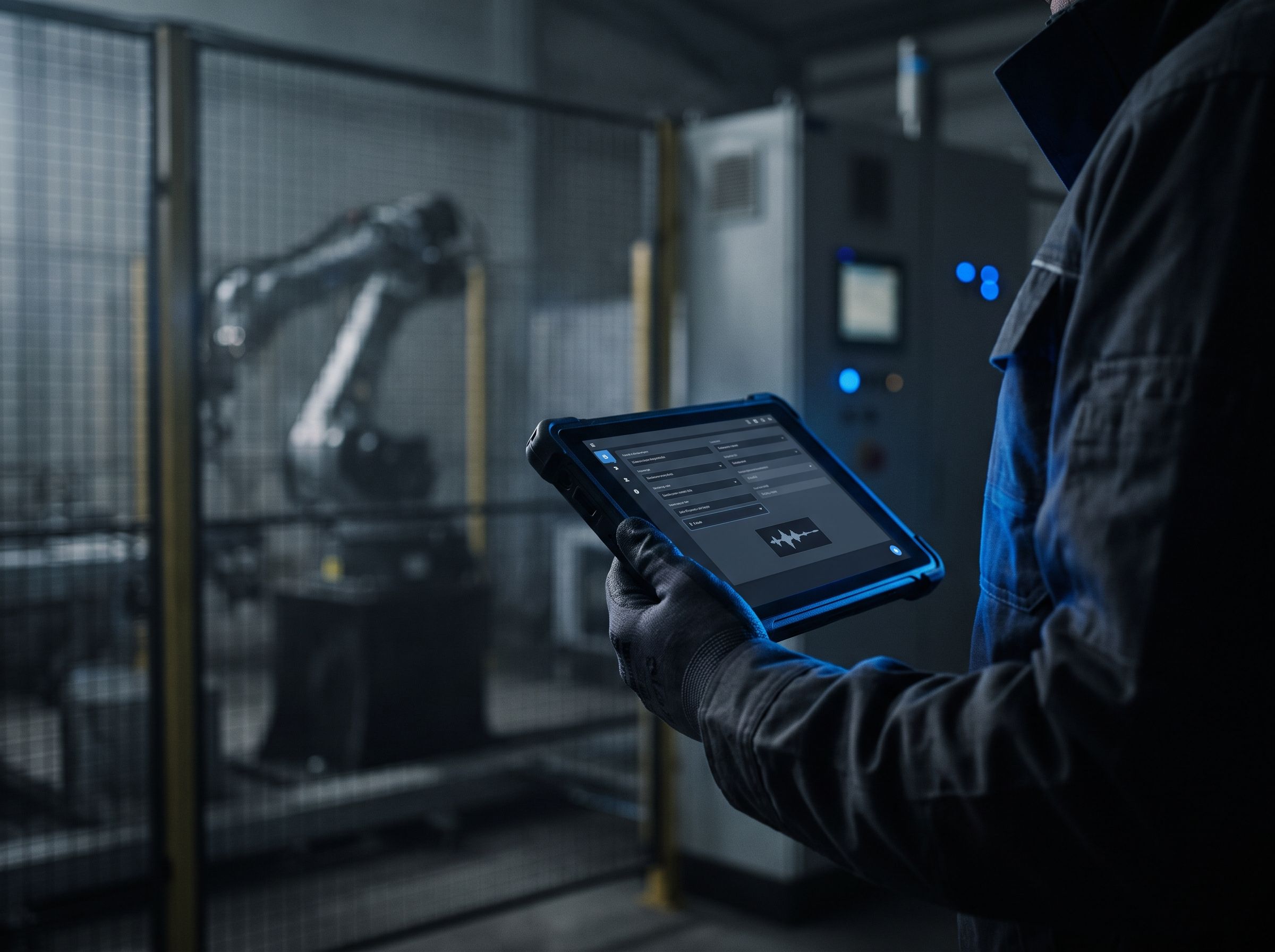
Service technician in work gloves holding a rugged tablet with a report form and dictation, a robot cell behind safety fencing in the background.
Service report on a mobile device

03

Service reports

Dictated or handwritten field notes become analysable reports including spare-part lists and follow-up tasks.

Today

The technician writes the report at the hotel in the evening, the back office retypes it into the ERP and phones back about anything unclear.

With Fusiores

The technician dictates the report on the shop floor — offline, on the company device. Report, parts list and follow-up tasks come out in your structure.

Report finished before the technician leaves the site

Services

Three stages, each bookable on its own

No framework agreement, no annual budget up front. You start with the free discovery call and decide again after every stage.

00

Discovery call

Free

30 minutes, no obligation. We sort out which of your processes make sense locally — and which do not.

„Which three of your processes run better locally than in the cloud?“

Pick a slot
01Duration: 2–3 weeks

AI potential analysis

Audit, report and roadmap — the basis for a decision before any hardware is bought.

Price: from €1,900

Included

  • On-site process audit, one day at your plant
  • Assessment of three to five use cases by effort and benefit
  • Hardware and licence requirements quantified
  • PDF report with a clear priority order
  • 12-month roadmap with a budget envelope
02Duration: 6–10 weeks

Pilot implementation

One use case, in production on your hardware, with defined acceptance criteria.

Price: from €9,000

Included

  • Deploying and hardening the model on your hardware
  • Indexing your document base
  • Interface for the department, in the browser, no installation
  • Read-only integration with ERP or PLM
  • Key-user training, half a day
  • Acceptance against criteria defined up front
03Term: 12 months, monthly thereafter

Fusiores Care

Ongoing operation, updates and support — so the system does not go stale after the pilot.

Price: from €600/month

Included

  • Monitoring and maintenance of the local system
  • Model and security updates, rolled out under control
  • Adapting prompts and index to new document revisions
  • One working day response time
  • Quarterly review with usage metrics

All prices net, plus VAT. The binding fixed price is quoted after the potential analysis; it depends on company size and scope. We do not resell hardware — we specify what is needed, you procure it yourself.

Background

Who is building this

Portrait of Paul Krümmling
Paul Krümmling, founder of Fusiores

Founder

Paul Krümmling

Paul Krümmling comes from robotics and manufacturing automation. That experience with machines, cycle times and document bases grown over decades shapes how Fusiores scopes work: start small, measure against the real process, scale only then.

Fusiores works exclusively with manufacturing companies between 50 and 500 employees in Bavaria. Short distances, German contracts, a named contact instead of a ticket system.

Location
Bavaria, Germany
Target segment
Manufacturing, 50–500 employees
Data residency
On-premise only
Third-country transfer
Does not occur
Contract and project language
German
Billing
Fixed price and flat fee, no tokens

Next step

30 minutes, one concrete question

Which three of your processes run better locally than in the cloud?

We go through them and tell you what is realistic on-premise — and what is not. No sales pitch, no slide deck, no follow-up sequence.

Pick a slot

Free, 30 minutes, by video or phone.

Questions before the call: contact@paulkruemmling.de

Or write to us

For the discovery call, the calendar above is the fastest route.

Placeholder without a send function. Please use the email address or the calendar. contact@paulkruemmling.de